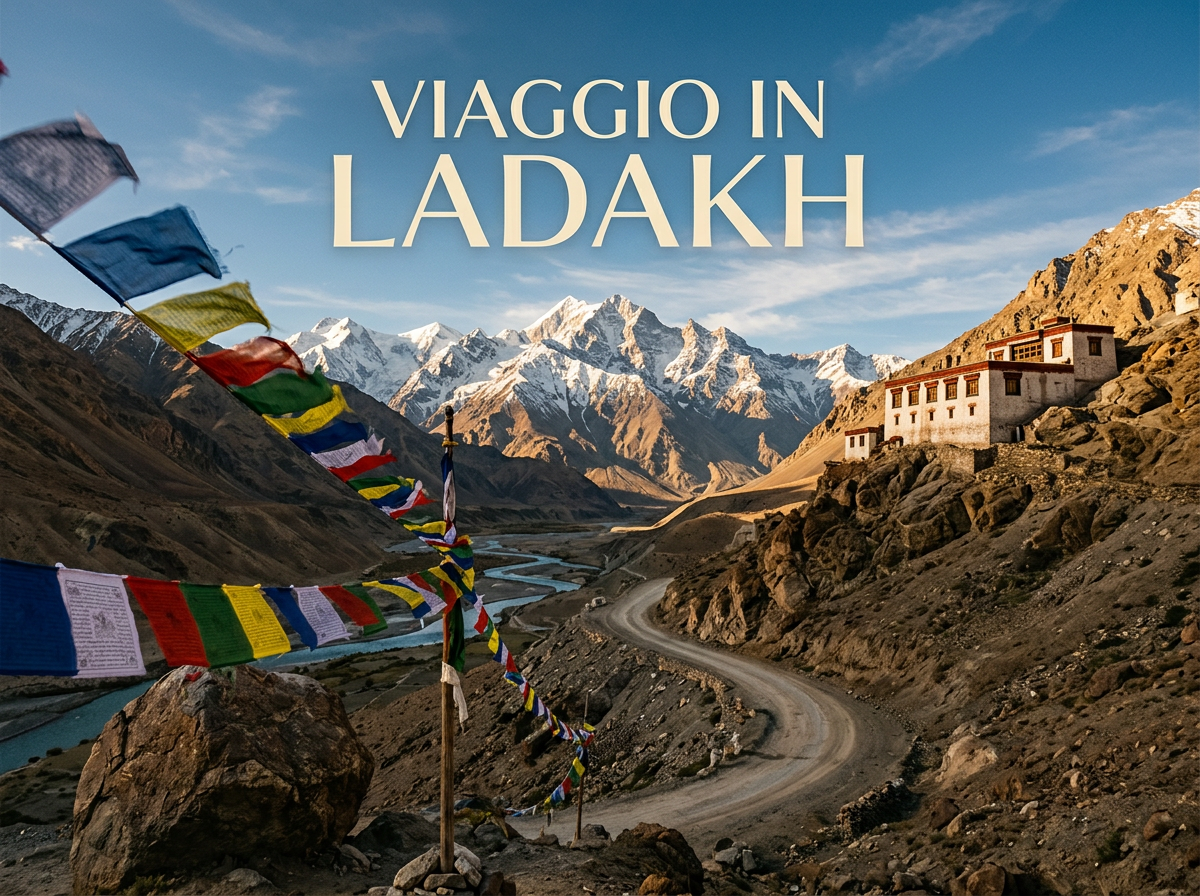
You have checked the map three times, saved the Nubra Valley photos, and then read a forum post that says the pass may be closed “because of a convoy.” That is the moment most Italian travellers realise Khardung La is not simply a scenic stop between Leh and the valley. It is a living mountain road, with checkpoints, army traffic, changing weather and a summit that deserves respect.
A Trip to Ladakh (Viaggio in Ladakh) often builds up to this crossing. And rightly so. Khardung La sits at 5,359 metres above sea level, on the Ladakh Range north of Leh, and connects the Indus Valley with the Nubra Valley and the Shyok River region. The road was built by the Border Roads Organisation and opened to public vehicles decades ago; it remains a vital supply route towards the Siachen Glacier area.
Why this pass matters
Khardung La is not famous only because the air is thin and the views are enormous. It is a working corridor. Military convoys use it to move essential supplies towards the Siachen sector, while travellers use the same road to reach Nubra Valley, Diskit, Hunder and Turtuk.
That shared use changes the experience. You may wait at South Pullu while a convoy passes, or find the upper section temporarily controlled after snowfall. This is not a problem to fear; it is simply part of travelling here. The pass is maintained by the Border Roads Organisation, and its condition can change quickly after wind, snow or rockfall.
Read More: Should You Choose the Destination or the Cruise Line First?
For many visitors, the significance is emotional too. You leave Leh after breakfast, climb through bare ochre slopes, and suddenly the horizon opens into a high, cold, almost lunar landscape. Then, a little further on, the road drops towards the greener Nubra side. The contrast is what makes the journey memorable.
The part most articles skip
Most guides tell you to acclimatise, drink water and go slowly. All true. But after several trips over this route, the detail I would explain first is this: plan the pass around the checkpoint, not around the photo.
The South Pullu checkpoint, on the Leh side, is where officials check travel documents and the Ladakh Environment Fee receipt. Foreign visitors also need the relevant Protected Area Permit for restricted areas such as Nubra Valley. Carry a printed copy as well as the digital one; mobile signal becomes unreliable well before the top.
Here is the practical lesson: do not treat the permit as something to arrange at the last minute in Leh. Do it the day before, print it, and keep it in an easily reachable pocket of your daypack. At altitude, with cold hands and a queue behind you, searching through emails is miserable. I once watched a traveller hold up an entire vehicle line because his receipt was saved in a phone with a dead battery. A paper copy solved it in seconds.
Also, ask your driver or local operator about convoy timing before leaving Leh. Army movements can affect when private vehicles are allowed through. A flexible morning plan is worth more than a rigid itinerary.
What the summit feels like
The top is exciting, but it is not a place to linger for hours. The air holds far less oxygen than at sea level, so even walking from the car to the prayer flags can feel harder than expected. Some people feel only a slight headache; others feel dizzy, nauseous or unusually tired.
My advice is simple: take the photograph, enjoy the silence, then get back in the vehicle. Do not run, do not climb onto rocks for a better angle, and do not ignore a pounding headache. If you feel unwell, tell your driver immediately and descend. The best response to altitude is not courage. It is common sense.
The summit sign is a popular photo point, but GPS-based measurements generally place the pass at about 5,359 metres. Some signs and older articles quote a higher figure, which is why travellers often arrive confused about the real altitude.
A Viaggio in Ladakh with the right pace
A well-planned trip to Ladakh (Viaggio in Ladakh) does not rush from the airport straight to the highest point. Leh itself sits high, so give your body time before attempting Khardung La. Spend your first days gently: walk around Leh, visit the market, have tea, and let your breathing settle.
Then make the pass part of a larger route, not a day-trip trophy. The natural continuation is towards Nubra Valley, where the landscape changes completely. After the barren climb, you reach the Shyok and Nubra river valleys, with sand dunes near Hunder and the Diskit Monastery overlooking the valley. This makes the crossing feel like a journey, rather than a box to tick.
If your interests include walking, a mountain trekking holiday in India (Vacanza trekking montagna India) can combine beautifully with this route, but Khardung La itself is primarily a road crossing. You do not need trekking experience to travel over it. You need patience, warm layers and a driver who knows the mountain.
The road, the weather and the driver
The ascent from Leh is full of switchbacks. The surface can be good in places and rough in others, especially after snowmelt or repairs. This is why a local driver matters more than a self-drive plan. They know where ice may linger in the shade, where loose gravel appears after a night of wind, and when it is wiser to wait.
Weather can turn quickly. A clear morning in Leh does not guarantee a clear pass. Clouds can gather, visibility can fall, and the wind at the top can cut through even a good jacket. Dress in layers, cover your head, and keep gloves accessible. I always keep a thermos of hot water in the vehicle; at that height, a warm sip feels far more valuable than another snack.
Read More: Thailand Nightlife: A Traveler’s Guide to Pattaya Karaoke
Fuel and vehicle condition are also practical concerns. Do not begin the route with a barely filled tank or a vehicle that has been making strange noises since Manali. The road is remote enough that a minor issue becomes a major delay.
Permits, money and small details
For the Khardung La and Nubra route, travellers need the correct Ladakh travel documentation. Indian nationals generally pay the Ladakh Environment Fee online, while foreign nationals require the Protected Area Permit for restricted areas including Nubra Valley. The receipt is checked at checkpoints such as South Pullu, so keep it accessible.
As a broad planning figure, budget roughly €20 to €30 per person for the official permit-related costs, depending on the current fees and the length of your itinerary. Confirm the exact amount on the official Leh portal before you travel, because rules and charges can be updated.
Keep some cash for small tea stalls, toilets and local purchases. Digital payment may work in Leh, but do not depend on it once you are climbing towards the pass.
Questions Italian travellers often ask
Is Khardung La really 5,359 metres high?
Yes. Independent GPS-based measurements place it around 5,359 metres, although roadside signs sometimes show a higher altitude. It is one of the highest motorable passes and a major route between Leh and Nubra Valley.
Do Italian travellers need a permit for Khardung La?
Yes. Foreign nationals need the Protected Area Permit for restricted areas such as Nubra Valley, and the receipt is checked at the South Pullu checkpoint. Arrange it online before leaving Leh and carry a printed copy, because signal disappears on the upper road.
Can you visit Khardung La and return to Leh on the same day?
It is possible, but it makes a very long day at high altitude. A better plan is to cross in the morning, continue to Diskit or Hunder, stay overnight in Nubra Valley, and return the next day. That gives you time to enjoy the valley instead of racing the daylight.
What should you do if you feel unwell at the top?
Stop moving, sit in the vehicle, drink water and tell your driver straight away. If symptoms worsen, descend towards Leh rather than continuing higher. The road back down is the safest answer to altitude discomfort.
A final thought before you go
Khardung La is not just a viewpoint at 5,359 metres. It is a mountain crossing with a purpose: a road used by local communities, travellers and army convoys alike. Treat it with patience, prepare your documents properly, and let the landscape set the rhythm.
If you are shaping a trip to Ladakh (Viaggio in Ladakh) and want help deciding whether to cross early, stay in Nubra, or add Turtuk and Pangong afterwards, send a message to Ciao India Tours. Tell us how many days you have and what you most want to see; we can help you build a route that feels right for you.